 lipid.site
What cholesterol actually is
Your body needs cholesterol to build cells and hormones. Your risk depends on how much of it travels in your blood, and in how many particles.
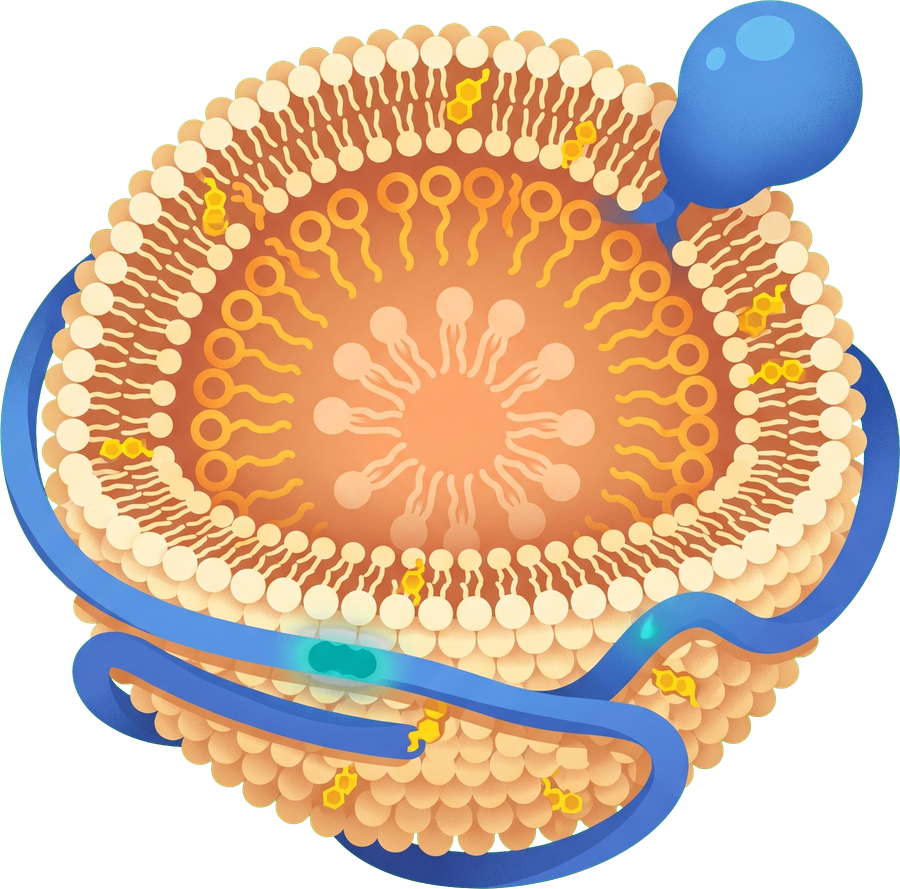
Inside an LDL particle
Tap the numbers to take it apart.
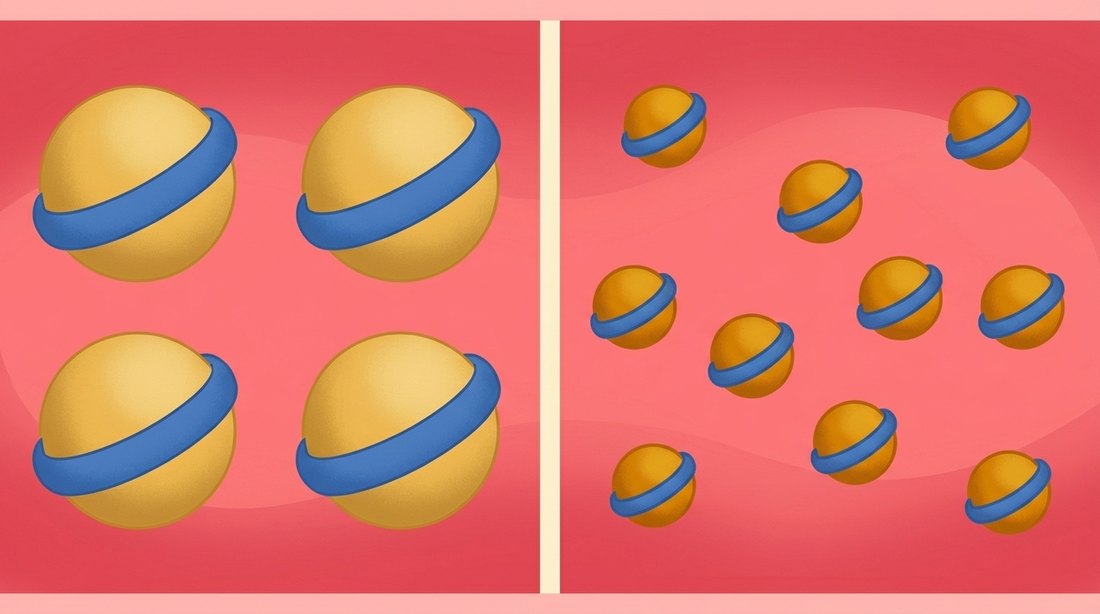
Same cholesterol, different count. Both sides can carry about the same total cholesterol, so LDL-C looks alike. The right side needs many more small particles to do it, so its ApoB is higher. More particles means more chances to slip into the artery wall.
Key takeaways
- 1
Cholesterol is a fat your body needs. Your liver makes most of it, and food adds the rest.
- 2
Blood is mostly water, so cholesterol rides in tiny particles. LDL is the main one, and every LDL particle carries exactly one ApoB protein.
- 3
LDL-C measures the cholesterol inside LDL particles. ApoB counts the particles themselves, and more particles means more chances to slip into an artery wall.
Go deeper
▸Where LDL comes from
The liver releases particles called VLDL. As the body strips out their fat (triglycerides), they shrink to IDL, then LDL, keeping the same single ApoB-100 protein the whole way.
LDL circulates for days until an LDL receptor, mostly on liver cells, grabs its ApoB-100 and pulls it in.
▸Same cholesterol, different count
Two people can have about the same LDL-C but a different number of particles. Small particles each carry less cholesterol, so it takes more of them to carry the same amount, and ApoB is higher.
ApoB counts all the particles that can cause plaque (VLDL, IDL, LDL and Lp(a)). When ApoB and LDL-C disagree, risk tends to follow ApoB.
▸What about HDL and Lp(a)?
HDL is often called "good" cholesterol because it helps carry extra cholesterol back to the liver. Medicines that raise HDL have not generally prevented heart attacks, so most attention goes to LDL and ApoB.
Lp(a) is an LDL-like particle with an extra protein attached. Its level is mostly set by your genes.
What people experienced
One person's experience isn't a prediction of yours.
Sources
- HDL (good), LDL (bad) cholesterol and triglycerides, American Heart Association
- LDL: the "bad" cholesterol, MedlinePlus (NIH)
- Cholesterol, MedlinePlus (NIH)
- Cholesterol, CDC
Not medical advice. This exhibit is general education to help you understand your condition and talk with your clinician. It doesn't tell you what to take or change. If you have chest pain or other signs of a heart attack or stroke, call 911.
Want everything in one place? Play the full interactive guide.